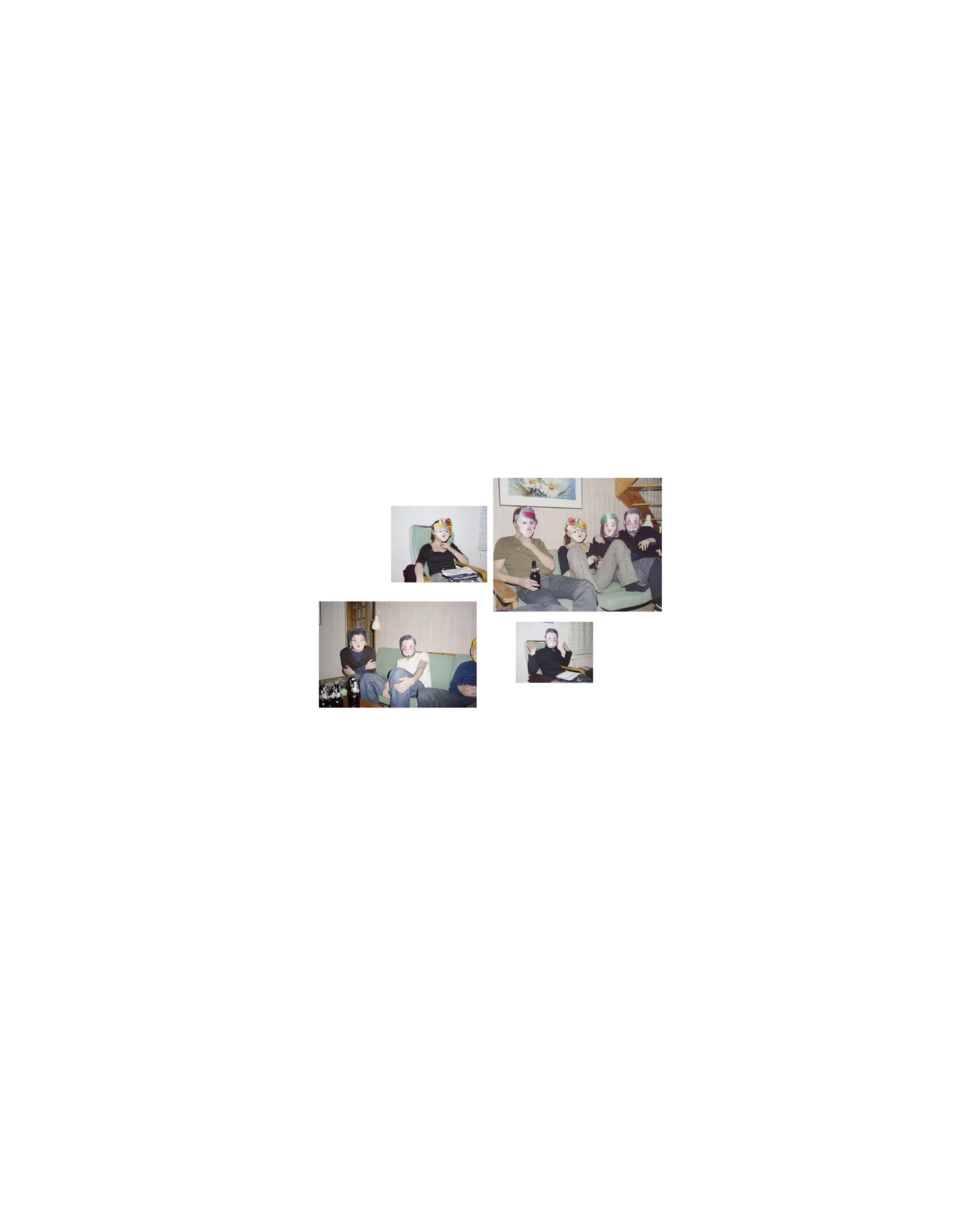
What do we actually see in a photographic portrait?
While it is widely understood that portraits are not truthful representations of a person, this insight is often suspended in the act of looking. The long history of photography as a tool of identification may play a role in this suspension of disbelief. Portraits are still readily taken as reflections of reality, and the fact that they are social constructions tends to fade from view.
The research The Situative Portrait begins with the social situation in which a portrait is made. Photographer, sitter, and anticipated spectators – physically absent yet influential – each play a role in this process. Through an interplay of practice and theory, Van IJken examines what these participants do and desire. From this emerges the concept of the situative portrait: an approach to portrait photography that foregrounds the conditions of its making and the network of actions and interactions from which the image arises.
The Situative Portrait is about the interpretation of photographic portraits. It is about what can and cannot be seen in them. In an age of AI and surveillance, where faces are increasingly reduced to data and social interaction to machine-readable images, the situative portrait functions as an exercise in resistance, insisting on critical engagement with images and their conditions of production.
This doctoral research was conducted at PhDArts, ACPA Leiden University and the Royal Academy of Art, The Hague, and was publicly defended on November 5, 2025.